The plan hangs on one person
The roster lives in a file that one person maintains. Anyone looking for a stand-in writes to her.
Sodalis is the software that holds a team's duty roster, knowledge base, contacts and incident documentation in one place. At three in the morning it is settled who is on duty and who gets asked next.
No sign-up, no e-mail address. You get your own instance with realistic data, deleted at the latest 60 minutes after your session ends. The application itself is in German.
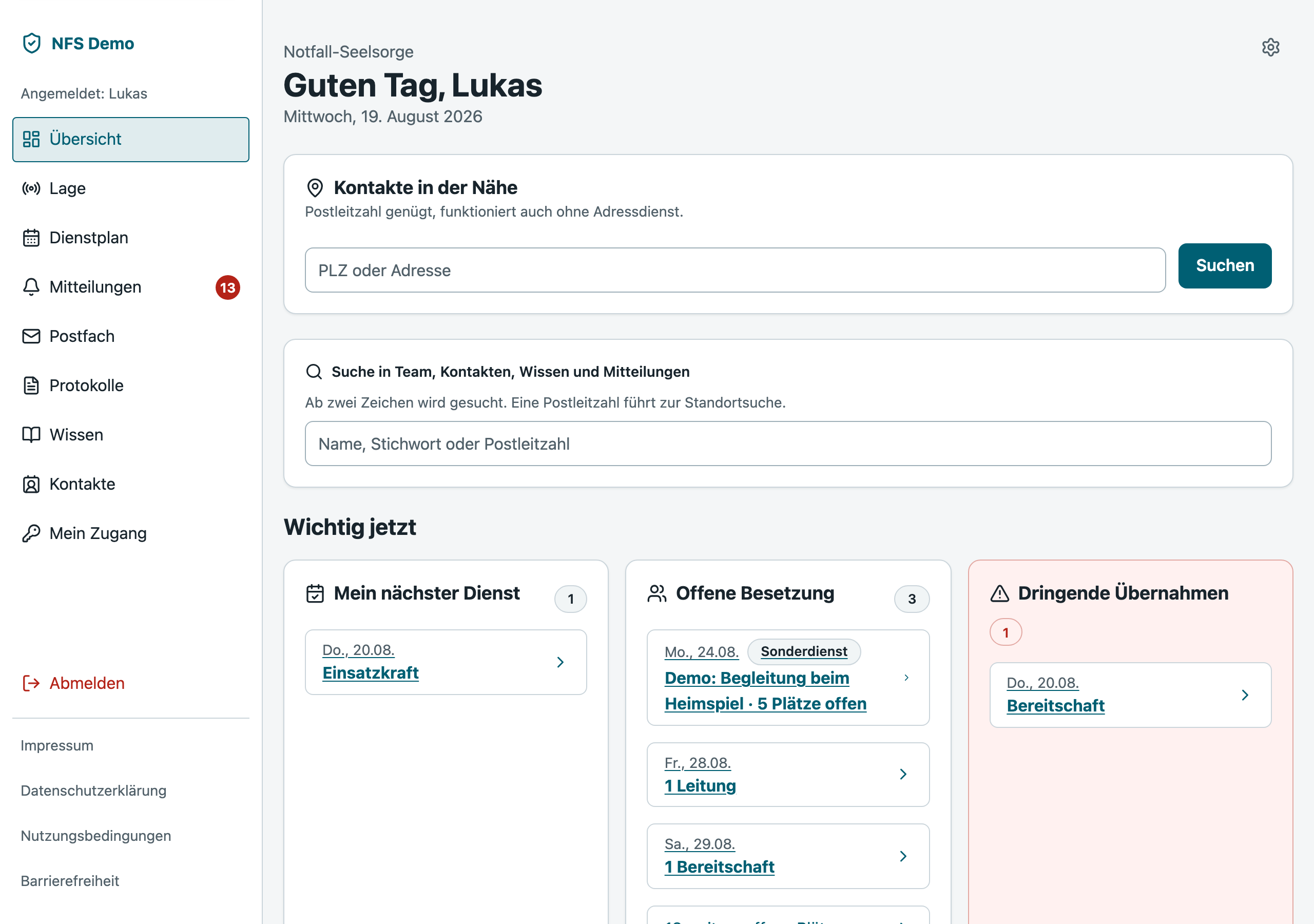
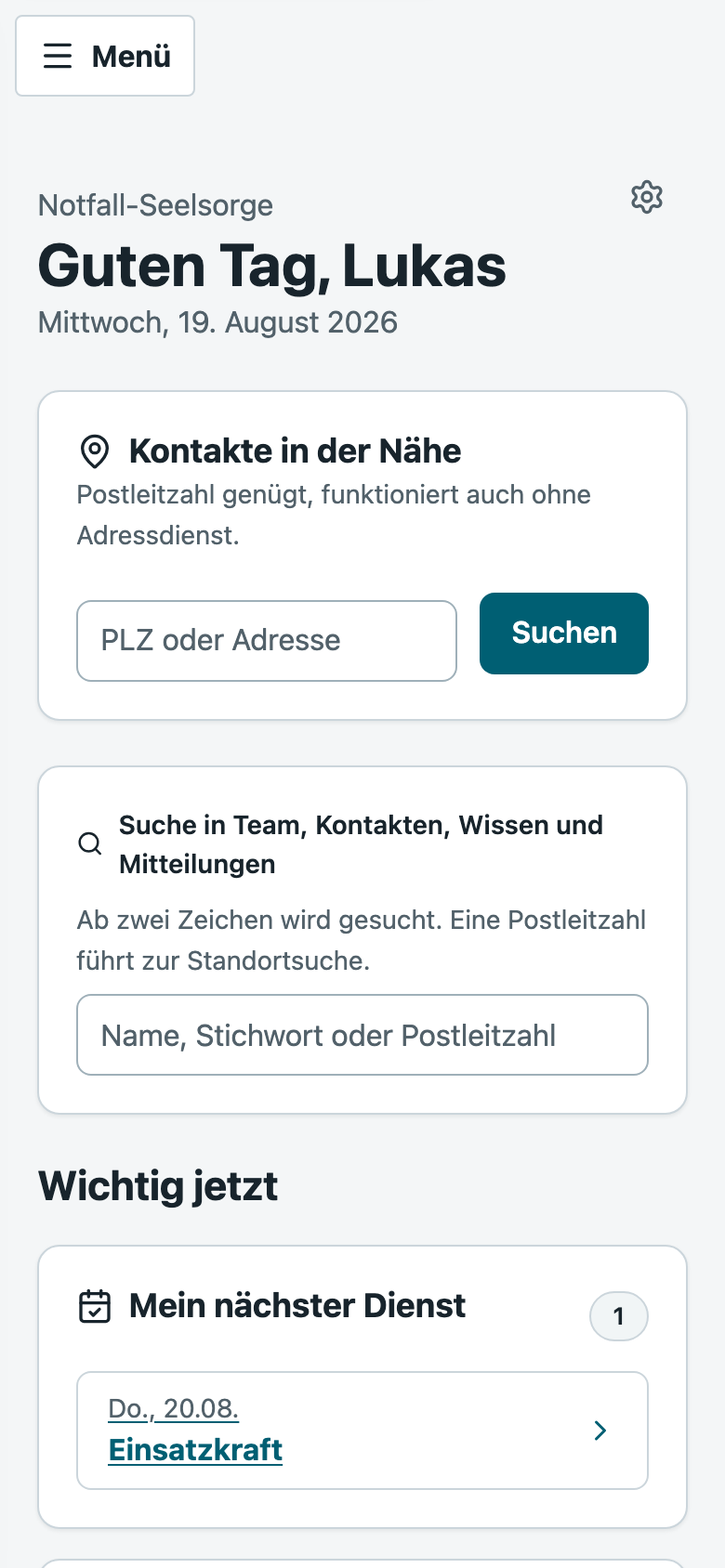
Every screenshot comes from the demo instance, with invented names and contacts. One click on “Start the demo” gets you the same screen.
Sodalis takes over three jobs that currently hang on individual people.
The roster lives in a file that one person maintains. Anyone looking for a stand-in writes to her.
A short-notice stand-in is sought in a chat with fifty people. Anyone willing to answer has no idea whether someone already said yes.
The sponsoring body, the supervising authority or a funder wants a report. It gets assembled from scraps of paper and a long search through old messages.
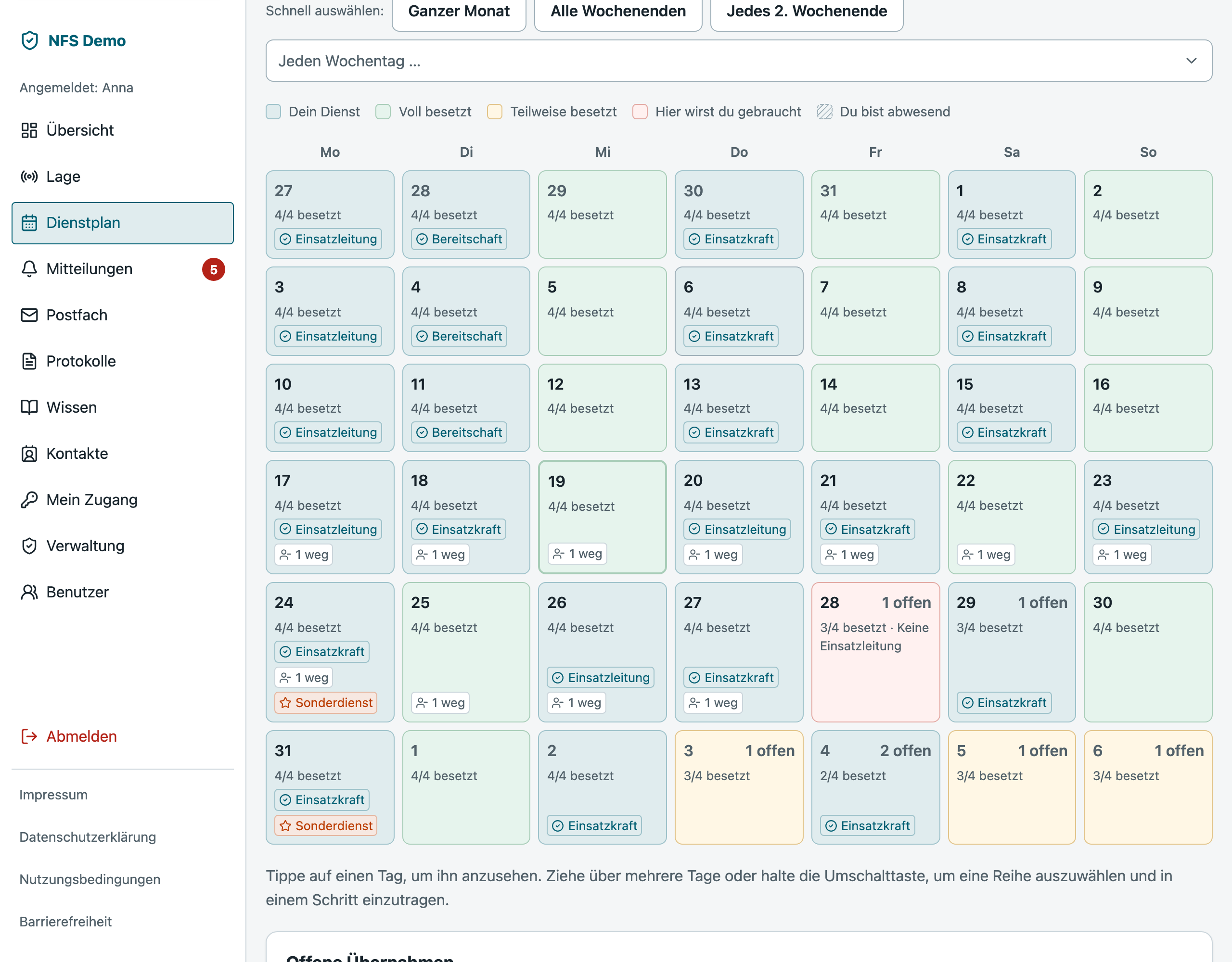
Everyone enters their own availability. The administration sees immediately where it is getting tight, and no longer has to ring round.
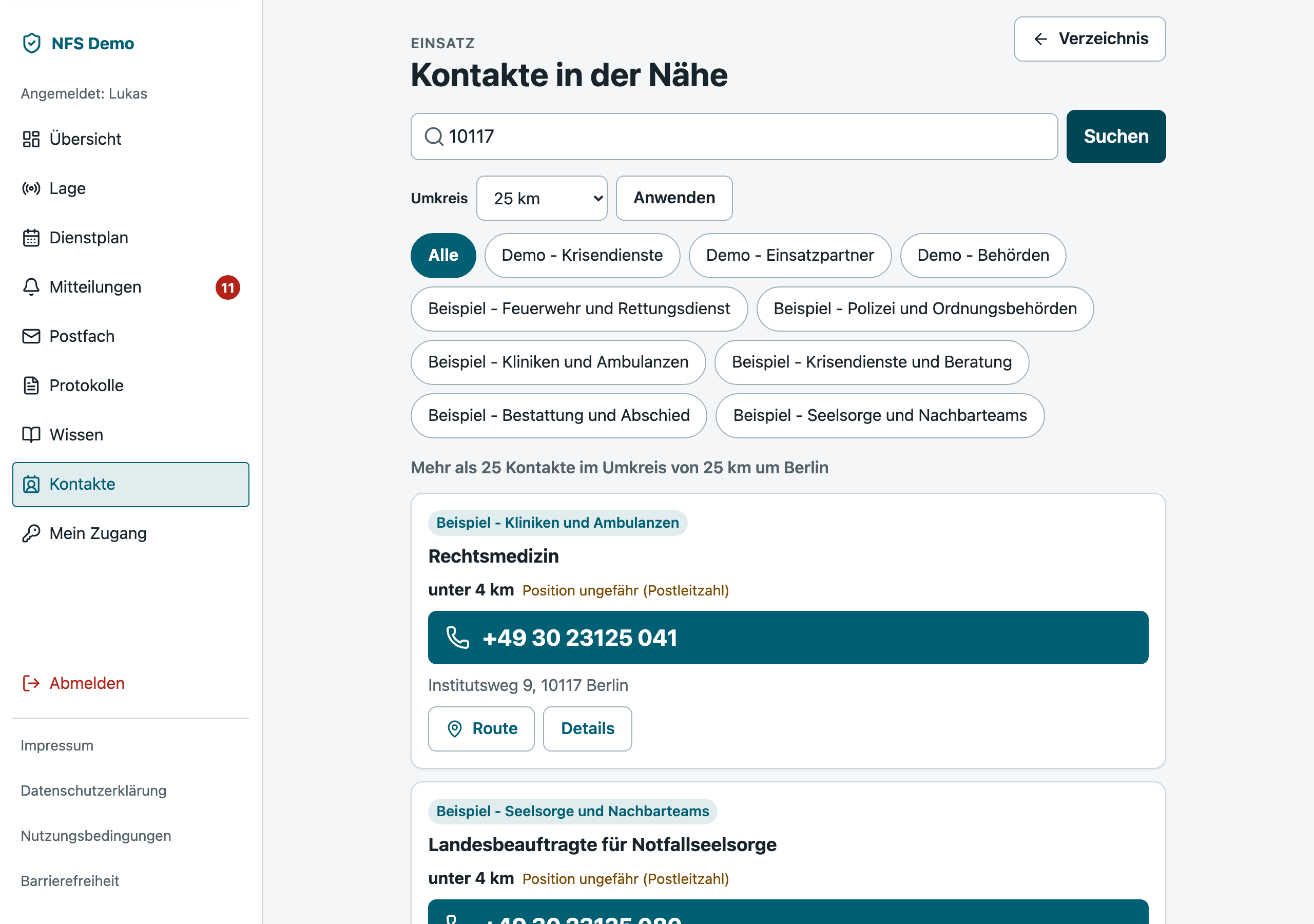
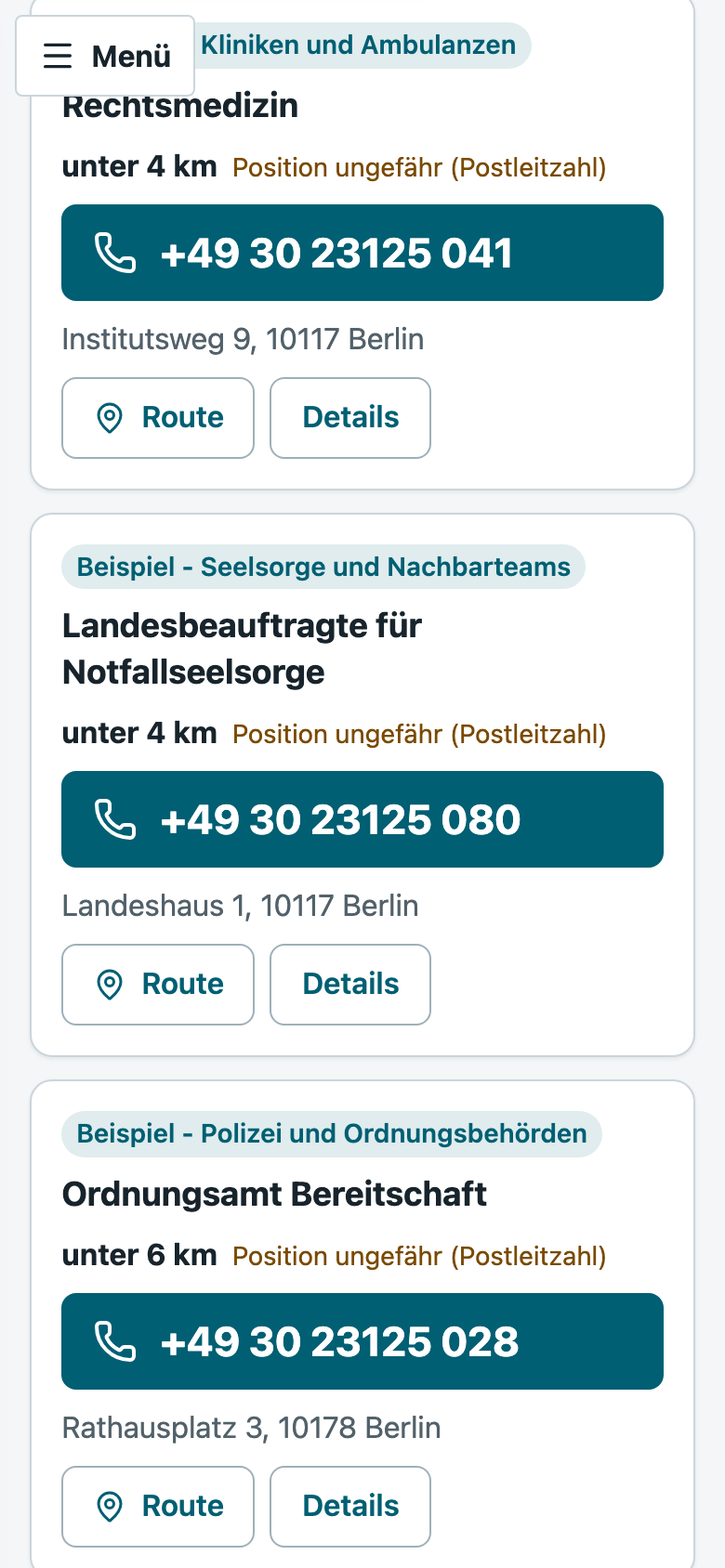
Contacts nearby, the knowledge pages for the situation, and the documentation form. The proximity search works even when no address service can be reached.
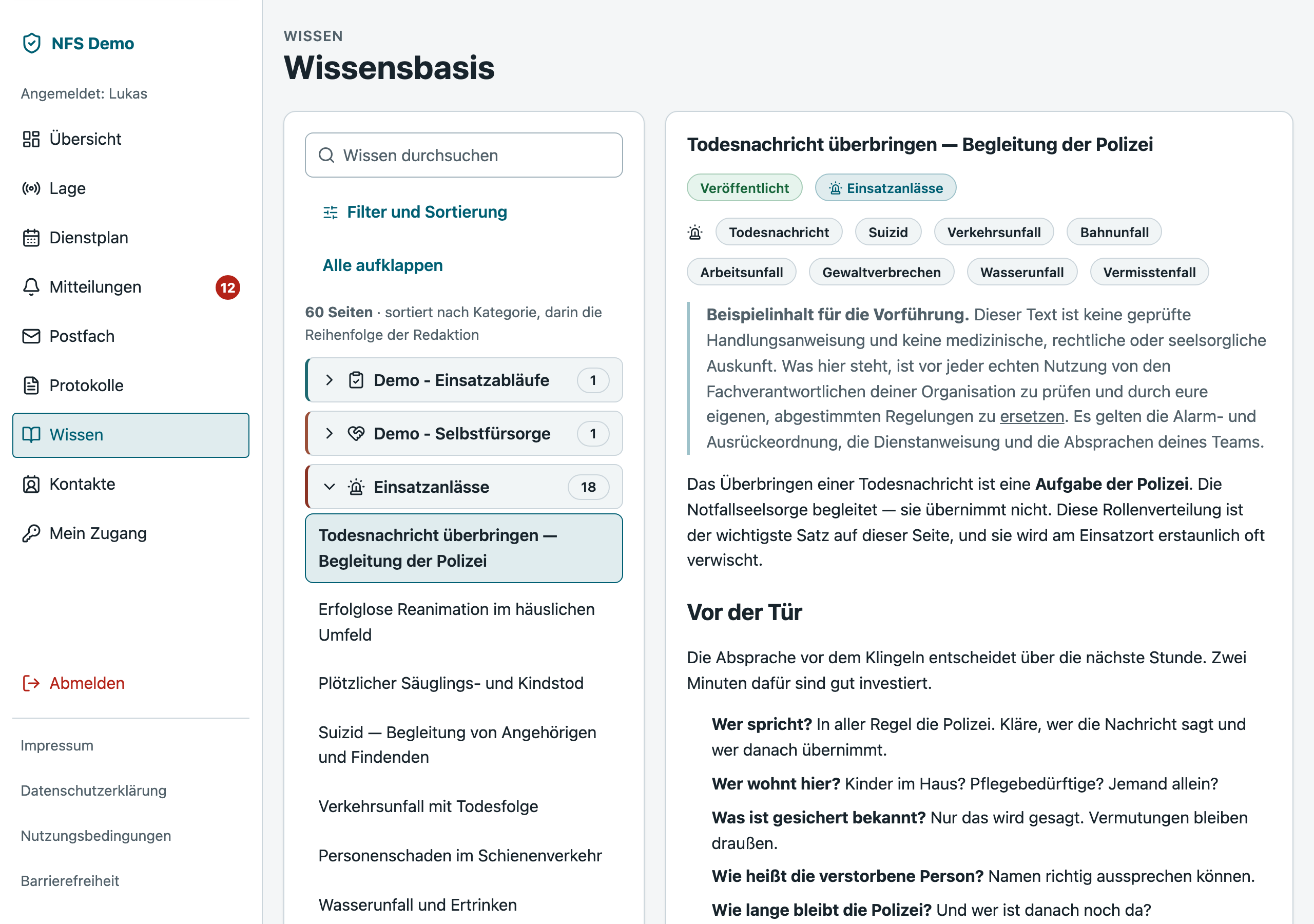
A knowledge base with three example pages looks like a prototype. Sodalis therefore ships with 37 professional pages as a starting point, plus 19 guides to the software itself and 6 example pages for your vehicles.
Incident reports in Sodalis have no field for a narrative. What gets recorded is the date, the indication, the alerting agency, the number of people affected, the measures taken, any onward referral, the duration and who was deployed. Nothing else.
Not every volunteer Notfallseelsorgende can rely on a right to refuse testimony in court. A system that invites detailed written documentation raises their personal legal exposure. The field is missing on purpose.
The content of a report is visible only to those involved, the person who wrote it and the leadership. Everyone else sees the title, the date and the status. The same rule applies to attachments.
A solid annual report still comes out of it. It is calculated from the structured fields, and it prints or exports as a table.
Sodalis is not a primary alerting channel. The Leitstelle still reaches the Einsatzleitung by phone, and that stays the case. This exclusion becomes an explicit part of the contract.
I am working on follow-up alerting with real acknowledgements, so that extra responders can be called in when a situation grows beyond what was planned. Today that runs through the contacts nearby, with a tap on the number.
One thing up front, because your data protection officer will ask: I run the server your data sits on. Whoever does that can technically reach the data, with me as with any other provider. So the question is not whether I could, but what happens if I do — and that is in the contract and in your own audit log.
Your data sits in its own database, separate from every other team's. You can pull your entire holdings as a machine-readable export at any time, without asking me and without waiting for me.
Servers and backups are in Germany, mail delivery in the EU. No service I engage is subject to the CLOUD Act. Anyone opening a route from a contact leaves Sodalis and lands in the map app of their choice; that is a link the person taps, and nothing is transmitted before they do.
Two-factor sign-in applies to everyone, with no exception and no switch. Anyone who loses their phone gets back in with a recovery code. If those are gone too, your own administration resets the second factor without touching the password.
Your data protection officer has further questions? Write to me and I will send the technical and organisational measures as a document. admin@flamingbattenberg.de
Fifteen people cost the same as fifty. There are no add-on modules and no pricing tiers by headcount.
One one-off item for setup, one annual item for running it, no tiers by headcount. The price is calculated so that operation, backups and further development stay funded, even if only a few teams take part.
Small team, tight budget? If the price is the only thing standing in the way, tell me. I have never yet turned a team down over the price. admin@flamingbattenberg.de
In Germany, with a German provider holding ISO 27001 certification and a data processing agreement available immediately. Mail delivery sits in France, also inside the EU.
No service I engage is subject to the CLOUD Act. Providers, certificates and the sub-processor annex I name in conversation and in the contract, because they can change.
Yes, in two versions: under the GDPR, and in a church-law variant for bodies subject to the KDG or the DSG-EKD.
Both are drawn up by a lawyer before the contract is signed, and your data protection officer gets them for review. I do not expect you to sign unread.
I apply the strictest standard throughout, including for teams that only fall under the GDPR. The most important consequence in practice: no US data processor anywhere in the data path.
On top of that, there is no free-text field in the incident documentation. Anyone doing pastoral work should not be nudged by the system into written narratives.
You trigger the full export yourself, whenever you want, and you get an open format. After that your database is deleted; it ages out of the backups according to the deletion schedule.
Both are in the contract, with deadlines.
Everyone sets their own password and sets up the second factor: an authenticator app on a phone or on a computer, two minutes per person. Passwords handed out by the administration do not exist, not even at the start.
Nobody has to install anything, Sodalis runs in the browser. And if someone can no longer get into their account, a recovery code or your own administration sorts it out — you do not need me for that.
Sodalis is developed and run by one person. That means short paths and no change that has to pass a committee first. It also means a one-person operation has to answer the continuity question before it is asked. Four points therefore apply, and they become part of the contract:
A complete instance with a realistic roster, the knowledge pages and an inbox. You can touch everything, it is your own copy.
Please do not enter real personal data in the demo. Your instance is deleted at the latest 60 minutes after you leave it, and in any case after three hours. The demo, like the application itself, is in German.